1. The black box problem: You can’t run a business on a guess
AI is brilliant. It can reason, predict, summarize, and simulate. But on its own, it’s still a black box.
No executive is going to approve a ten million dollar budget, shift their go to market plan, or green light autonomous action based on output they can’t personally verify. The tools may be automated, but the accountability will always be human.
To move from novelty to trusted partner, AI requires a foundation that only analytics provides, through:
A semantic layer that speaks your business language. If AI doesn’t understand what an “active lead,” “attrition,” or “Q1” actually means in your business, the insights it generates aren’t just unhelpful, they’re wrong. This semantic foundation is where raw data becomes trusted, contextualized information AI and humans can share.
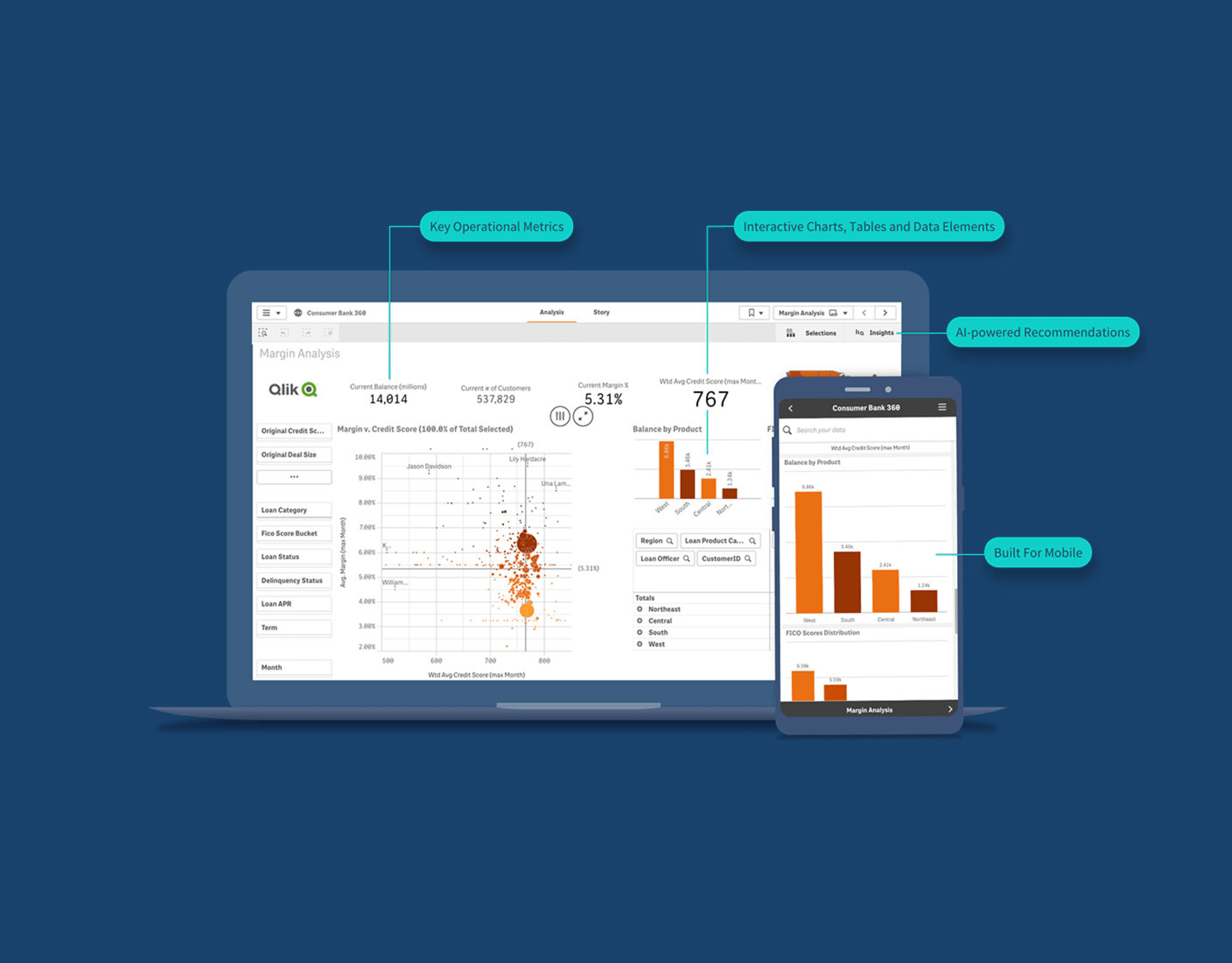
A visual control panel for human verification. Leaders need to see the thresholds, the inputs, the trends, and the logic that sit behind a prediction. Visual intelligence turns AI from a black box into a transparent, explainable system. It’s the instant audit trail that lets a decision maker say “I see it. I understand it. I trust it. Let’s go.”
2. Fragmented analytics exposed the real problem: Trust
Most organizations don’t suffer from a lack of tools. They suffer from a lack of alignment. Insights are scattered across dashboards, notebooks, copilots, embedded systems, and disconnected BI platforms.
When nothing matches, trust evaporates. And when trust evaporates, decision making slows. Executives stall. Teams hedge. Organizations hesitate.
Visual intelligence solves the last mile trust gap. It gives leaders a single, verifiable, shared place to confirm:
the data
the logic
the thresholds
the risk
the action
3. Analytics has become the operating system for decisions
So are dashboards dead? Only the bad ones. The old static handcrafted reports disconnected from a source of truth—those absolutely should disappear. They’re slow, they’re manual, and in the AI era, they’re dangerous.
But modern visual analytics has a new job. It’s the operating system for AI driven decisions and autonomous actions.
Analytics now defines:
the rules and guardrails
the logic trail behind predictions
the validation layer for autonomous agents
the shared reality teams align around in real time